
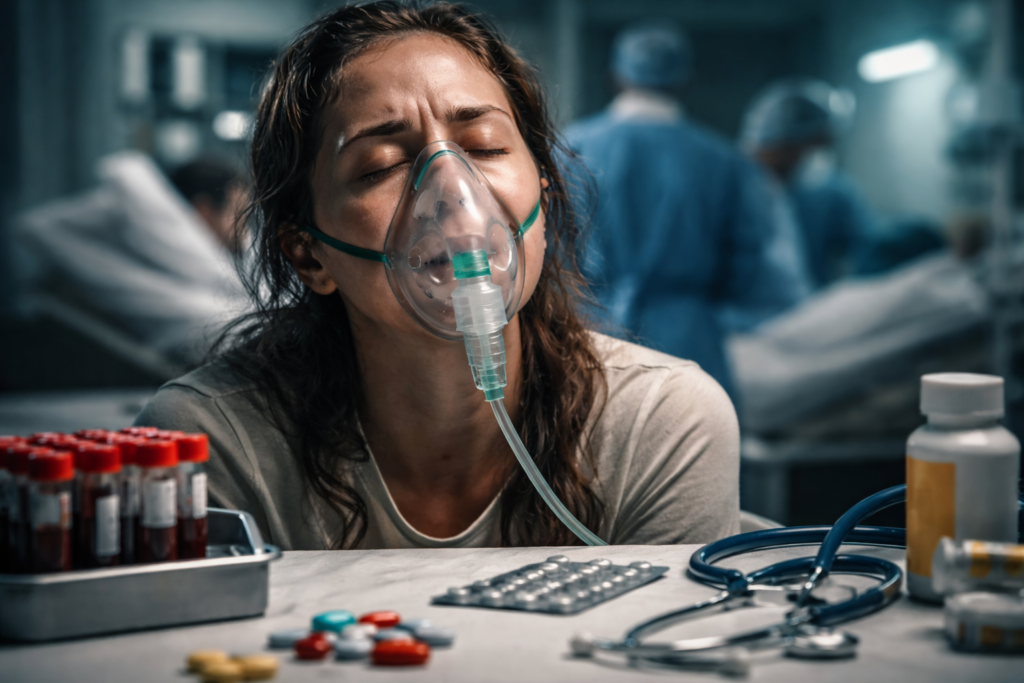
World Tuberculosis Day: A Disease We Know How to Stop-Yet Still Haven’t
Every year, March 24 passes quietly as World Tuberculosis Day. It rarely makes headlines. There’s no widespread urgency. But what it represents is anything but quiet.
Tuberculosis (TB) is still one of the deadliest infectious diseases in the world.
In 2024, about 10.7 million people fell ill with TB, and roughly 1.23 million lost their lives. That’s over 3,000 deaths every single day-from a disease that is both preventable and curable.
When you step back and look at the bigger picture, the reality becomes even harder to ignore.
The Numbers Tell a Difficult Story
Despite decades of medical progress, TB continues to rank among the top infectious killers globally-recently even surpassing COVID-19.
Some facts are hard to overlook:
- Nearly 1 in 4 people worldwide carry TB bacteria in its latent form
- Without treatment, about half of those with active TB may die
- The global fatality rate still hovers around 11-12%
In simple terms, more than 1 in 10 people who develop TB may not survive-not because treatment doesn’t exist, but because they don’t receive it in time.
But This Isn’t a Losing Battle
There is progress-real, measurable progress.
Since 2000, global efforts to fight TB have saved an estimated 83 million lives. That’s one of the most significant public health achievements of our time, even if it rarely gets the attention it deserves.
Recent trends show steady improvement:
- TB deaths fell slightly from 1.25 million in 2023 to 1.23 million in 2024
- Global death rates have dropped by about 29% since 2015
- In India, TB mortality declined from 28 per lakh in 2015 to 21 per lakh in 2024
These aren’t dramatic breakthroughs. They’re slow, consistent wins-and they matter.
Treatment Has Come a Long Way
One of the biggest shifts in the fight against TB isn’t just better medicine-it’s shorter, more effective treatment.
Earlier:
- Standard TB treatment could last 6 months or more
- Drug-resistant TB often required 18-24 months of therapy
Now:
- New regimens like BPaLM can treat even resistant TB in about 6 months
Shorter treatment means better adherence, fewer dropouts, and less transmission. In other words, it saves more lives.
TB Is More Treatable Than Most People Think
Here’s something that often surprises people:
With proper care, standard TB treatment has a success rate of around 85-90% globally.
That makes TB one of the most treatable infectious diseases.
But there’s a major gap-access.
Only about 2 out of every 5 people with drug-resistant TB actually receive treatment. So the issue isn’t whether TB can be cured. It’s whether people can reach the cure.
So Why Does TB Still Exist?
If we have the tools to fight TB, why are millions still affected?
Because TB isn’t just a medical issue-it’s a social and systemic one.
- 87% of cases come from just 30 high-burden countries, including India
- Poverty, malnutrition, and overcrowding continue to drive its spread
- Delayed diagnosis and weak healthcare systems slow down treatment
And then there’s funding.
Since 2020, global TB programs have faced stagnant or declining financial support. If this continues, it could result in millions more cases and deaths in the coming years.
In short, science is advancing-but systems aren’t keeping pace.
Where We Stand Today
The reality is both hopeful and frustrating.
We have:
- The knowledge (over a century since TB was discovered)
- The treatment (with high success rates)
- The tools (rapid diagnostics and newer drugs)
And yet:
- Millions still fall sick each year
- Over a million people still die
- Many cases go undiagnosed entirely
That’s the gap we’re facing.
A Final Thought
World Tuberculosis Day isn’t just about raising awareness. It’s about confronting an uncomfortable truth:
This is a disease we already know how to stop.
And yet, it continues to exist-not because it’s unbeatable, but because solutions aren’t reaching everyone equally.
Until they do, these numbers won’t just remain statistics.
Comments (0)
Sign in to leave a comment